This is a collection of custom Magic the Gathering decks!!!
These decks are free for anyone to copy, modify or take inspiration from for personal use!!!
Can also be used with Tabletop Simulator on Steam for online card play with your friends!!!
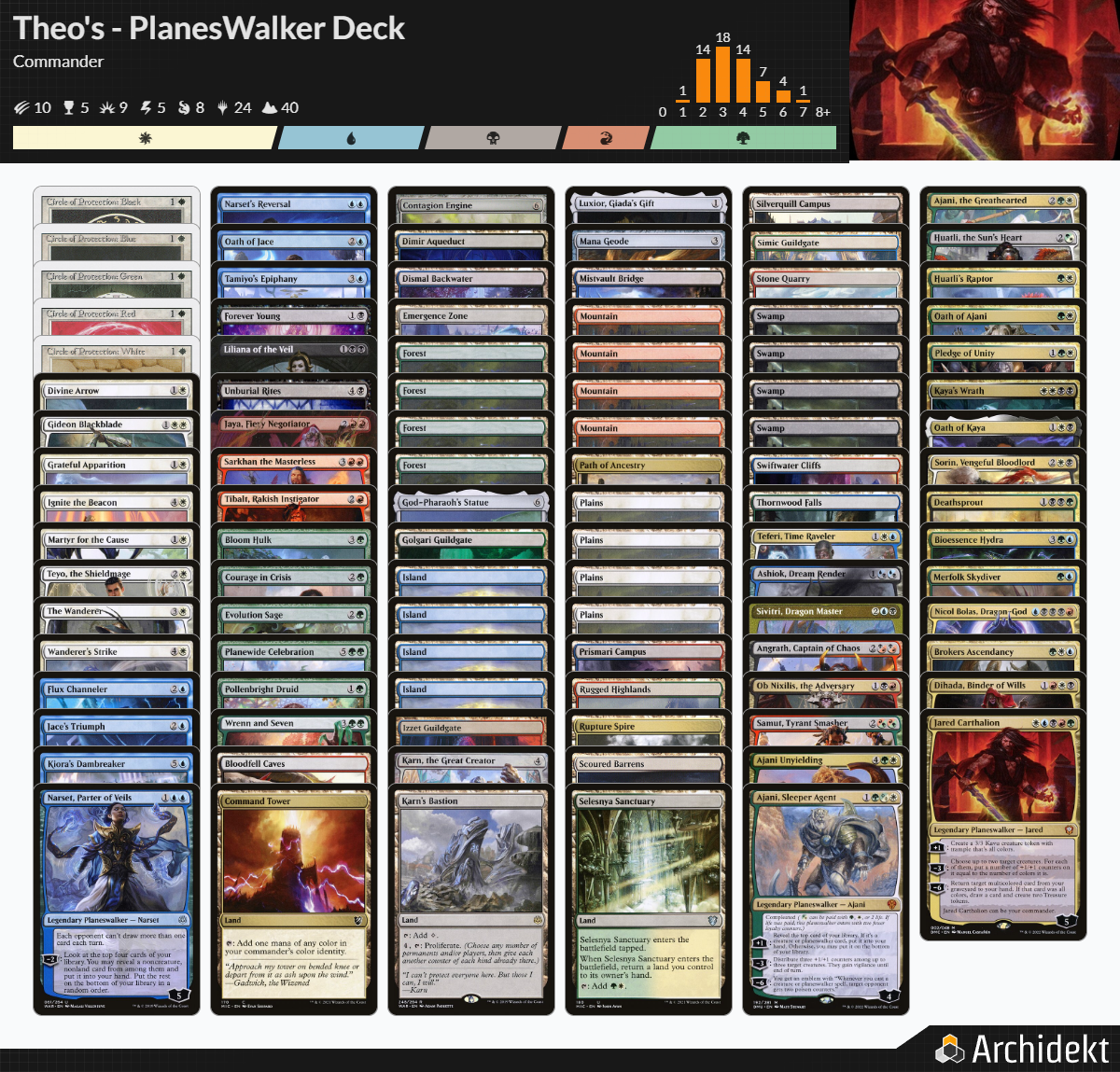
Theo's PlanesWalker Deck – A Symphony of Superfriends and Proliferation
Commander: Jared Carthalion – a five‑color avatar whose +1 creates a chorus of 3/3 Kavu for each color among your non‑land permanents and whose ultimate returns your planeswalkers from exile like a reprise in a symphony.
Theo’s build is a five‑color “superfriends” deck that stages a council of twenty‑three planeswalkers from across the multiverse. Gideon charges in like a martial brass fanfare; Narset cuts through greedy card draw with flute‑like clarity; Nicol Bolas’s dark strings steal abilities from your other heroes; Wrenn and Seven’s druidic harmonies grow and regrow a towering Treefolk. Each planeswalker brings a unique instrument to the arrangement, yet they all share the same score: protect, proliferate, and eventually unleash game‑winning ultimates.
To support this ensemble, the deck plays a proliferate package. Creatures such as Bioessence Hydra, Flux Channeler, Evolution Sage, Grateful Apparition, Merfolk Skydiver, Pollenbright Druid and Huatli’s Raptor add loyalty counters whenever you cast spells, play lands or connect in combat. Bloom Hulk, Kiora’s Dambreaker and Martyr for the Cause burst into the scene with ETB or death triggers that amplify your counters. Wanderer’s Strike, Courage in Crisis, and Planewide Celebration provide encore proliferate effects from the spell suite. Over time, the number of loyalty counters swells like a crescendo, turning Bioessence Hydra into a gargantuan finisher and bringing each planeswalker closer to their ultimate.
Protection is woven into the deck’s defensive melody. The five Circle of Protection enchantments allow you to blunt any color’s attacks. Oath of Ajani reduces the cost of your planeswalker spells while bolstering your creatures; Oath of Jace smooths your draws; Oath of Kaya pings opponents and protects your life total; and Brokers Ascendancy adds loyalty counters and +1/+1 counters at every end step, like a metronome marking time. Deathsprout and Divine Arrow handle opposing threats, Narset’s Reversal can turn an enemy’s spell back on them, Kaya’s Wrath sweeps the board when necessary, and Pledge of Unity both pumps your team and gives life as the choir swells.
The land base uses a rainbow of Guildgates, campuses and gainlands to fix mana, with Path of Ancestry letting you scry for planeswalkers and Karn’s Bastion providing repeatable proliferate. Emergence Zone can give your planeswalkers flash in a pinch. Luxior, Giada’s Gift in the equipment slot turns planeswalkers into creatures when you want to swing for lethal.
Strategy & Playstyle:
Early Game: Set up your mana base with Guildgates and gainlands. Deploy protective enchantments and low‑cost proliferators such as Grateful Apparition and Pollenbright Druid. Cast Oaths to reduce planeswalker costs and draw cards.
Mid Game: Begin developing your superfriends: play a couple of planeswalkers and protect them using circles, tokens generated by Jaya, Fiery Negotiator, Teyo, the Shieldmage, and Nicol Bolas’s theft. Tutor for the right planeswalker with Ignite the Beacon, or dig with Jace’s Triumph and Tamiyo’s Epiphany.
Late Game: Once you have multiple planeswalkers and proliferators on board, the deck snowballs. Brokers Ascendancy, Planewide Celebration, and Karn’s Bastion stack loyalty counters rapidly. Bioessence Hydra grows enormous and can be reanimated via Unburial Rites if answered. Use ultimates like Nicol Bolas to steal permanents, Ajani Unyielding to exile and draw, Teferi Time Raveler to lock down opponents, or Wrenn and Seven to flood the board with Treefolk. Finally, strap Luxior, Giada’s Gift onto a planeswalker for a surprise attack, or exile and reset them with Jared Carthalion’s −3 to reuse their abilities.
The result is a deck that tells a story: a coalition of heroes standing shoulder to shoulder, each one lending their strength to a five‑color anthem. Over the course of a game, the board blossoms with loyalty counters and +1/+1 counters. The music builds from a quiet introduction to a resounding finale as ultimates fire in sequence. Whether you’re playing casual games with friends or showcasing the breadth of your collection of planeswalkers, Theo’s PlanesWalker Deck offers a flavorful and mechanically cohesive experience that is equal parts narrative, strategy and spectacle.
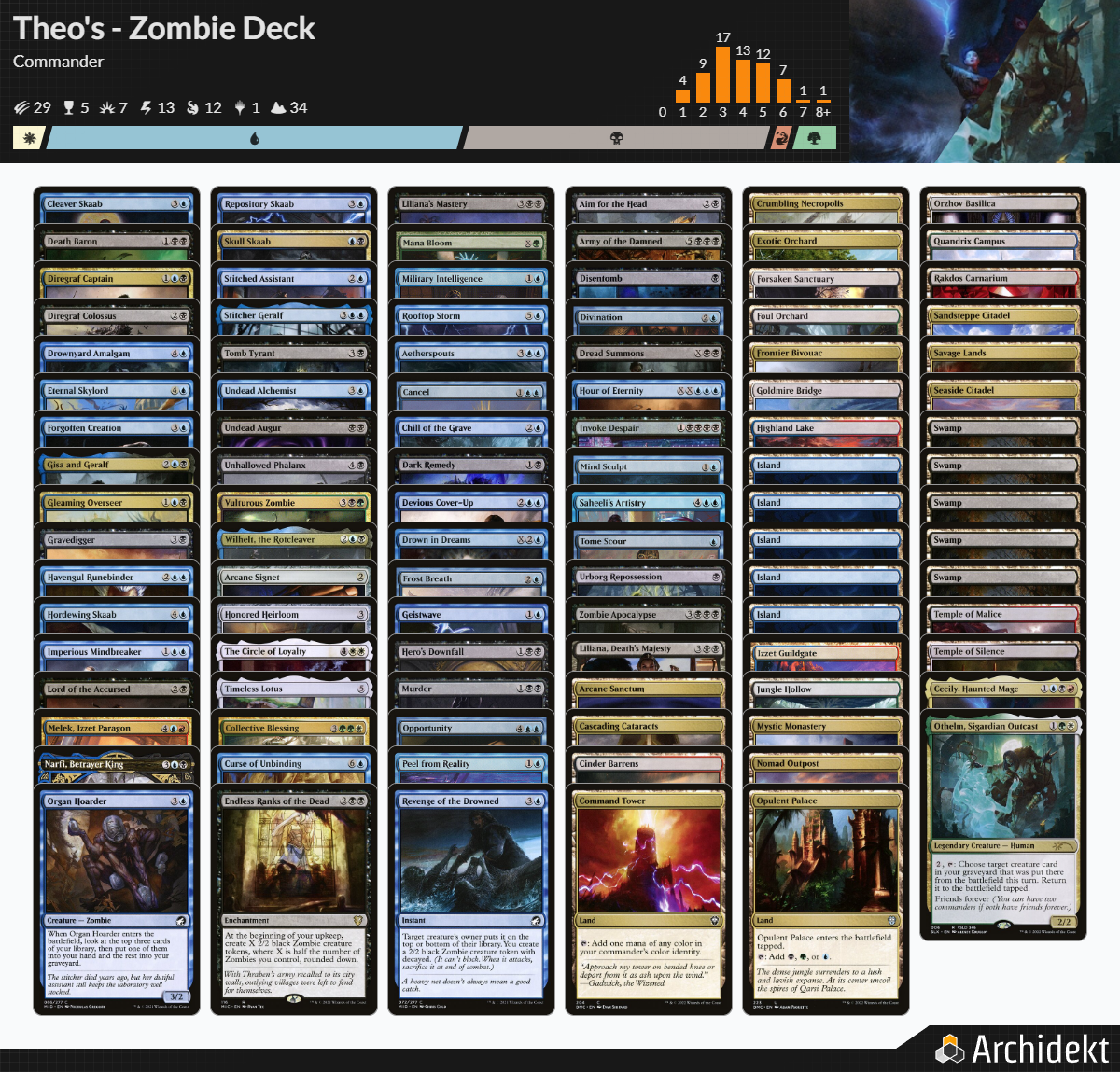
Theo's Zombie Deck – Necromantic Carnival of the Five Colors
Commanders: Cecily, Haunted Mage and Othelm, Sigardian Outcast, an unlikely partnership that blends arcane intellect with grave‑tending devotion. Cecily expands your hand size to eleven and rewards you with extra cards whenever she attacks; if you hoard enough knowledge, she even lets you cast an instant or sorcery for free. Othelm, meanwhile, acts as a rescue line from the grave, returning creatures that died this turn back to the battlefield. Together they form the backbone of a deck that is equal parts spell‑slinging and zombie‑raising.
Theme and Strategy
This is a five‑color zombie tribal deck with a twist. The core is built around classic undead lords, Death Baron, Diregraf Captain, Lord of the Accursed, Narfi, Betrayer King and Liliana’s Mastery, that boost your shambling horde with +1/+1 and abilities like deathtouch and menace. Token engines such as Diregraf Colossus, Endless Ranks of the Dead, Wilhelt, the Rotcleaver, Army of the Damned, Dread Summons and Zombie Apocalypse quickly fill the battlefield with decayed bodies. Rooftop Storm makes all of your zombie creatures cost zero, turning your hand into a ready‑made army.
A secondary theme involves self‑mill and draw to feed Cecily’s huge hand. Organ Hoarder, Hordewing Skaab, Stitched Assistant, Undead Augur, Forgotten Creation, Military Intelligence, Divination, Opportunity, and Mind Sculpt help you churn through your library and fill your graveyard. Imperious Mindbreaker and Undead Alchemist convert milling opponents into additional zombies, while Vulturous Zombie grows as opponents’ cards hit the graveyard. Liliana, Death’s Majesty is the lone planeswalker, milling you and reanimating creatures while producing 2/2 zombie tokens. With your hand overflowing, Cecily can unleash huge sorceries like Army of the Damned or Hour of Eternity for free
Recursion and Reanimation play a major role. Gisa and Geralf lets you cast zombies from your graveyard; Stitcher Geralf, Havengul Runebinder, Tomb Tyrant, Othelm, Gravedigger, Disentomb, Urborg Repossession, Hour of Eternity, and Zombie Apocalypse ensure that dead creatures don’t stay dead. Repository Skaab returns powerful instants and sorceries, while Saheeli’s Artistry copies your best creatures or artifacts. Aim for the Head and Invoke Despair force discards or sacrifices, keeping opponents off balance.
To support the mana‑hungry nature of a five‑color deck, the land base uses a kaleidoscope of tri‑lands and two‑color lands, Cascading Cataracts, Crumbling Necropolis, Mystic Monastery, Sandsteppe Citadel, Savage Lands, Temple of Malice, Temple of Silence, Command Tower and more, along with mana rocks such as Arcane Signet, Honored Heirloom, Timeless Lotus and the enchantment Mana Bloom. Collective Blessing and The Circle of Loyalty function as global anthems, while Curse of Unbinding steals creatures from opponents.
Play Patterns
Early Game: Fix your colors with lands and rocks. Deploy small zombies and lords to build a board presence. Use Mind Sculpt or Tome Scour to start filling graves, and draw cards with Military Intelligence, Divination, or Cecily’s attack trigger.
Mid Game: Play token engines like Diregraf Colossus, Wilhelt, Endless Ranks or cast Dread Summons. If Cecily has eleven or more cards in hand, cast a free spell, perhaps Army of the Damned to create thirteen zombies or Saheeli’s Artistry to copy key permanents. Use Othelm, Gravedigger, Tomb Tyrant, or Stitcher Geralf to recycle creatures that died this turn.
Late Game: Flood the board with a tide of undead. Rooftop Storm lets you empty your hand of zombies for no mana. Liliana’s Mastery and Collective Blessing pump the entire horde. With your draw engines and recursion on line, you can keep attacking and sacrificing zombies while reanimating them endlessly. Finish with a massive Zombie Apocalypse, Army of the Damned, or simply overwhelm opponents under a horde of pumped, menacing zombies.
Imagine an eerie carnival where necromancers and mad scientists from across the multiverse gather to raise an army unlike any seen before. Cecily’s tower thrums with arcane energy as she pores over grimoires, her hand growing ever larger. Othelm tends the graves beneath, ready to pull back any soldier who falls. Lurching forms claw their way up through the soil; robed lords chant blessings that harden bones and sharpen teeth; Liliana herself appears briefly to swell the ranks. Spells and enchantments weave through the battlefield like organ music, culminating in a climactic crescendo when Army of the Damned or Zombie Apocalypse brings the full force of your necromantic orchestra crashing down on your foes.
This deck marries tribal synergy with five‑color chaos, combining milling, card draw and free spells to generate an unstoppable tide of zombies. Whether you’re a lover of undead hordes, a fan of quirky commander pairs, or just someone who enjoys a theatrical endgame, Theo’s Zombie Deck delivers a flavorful and mechanically rich experience that feels like conducting a macabre symphony.
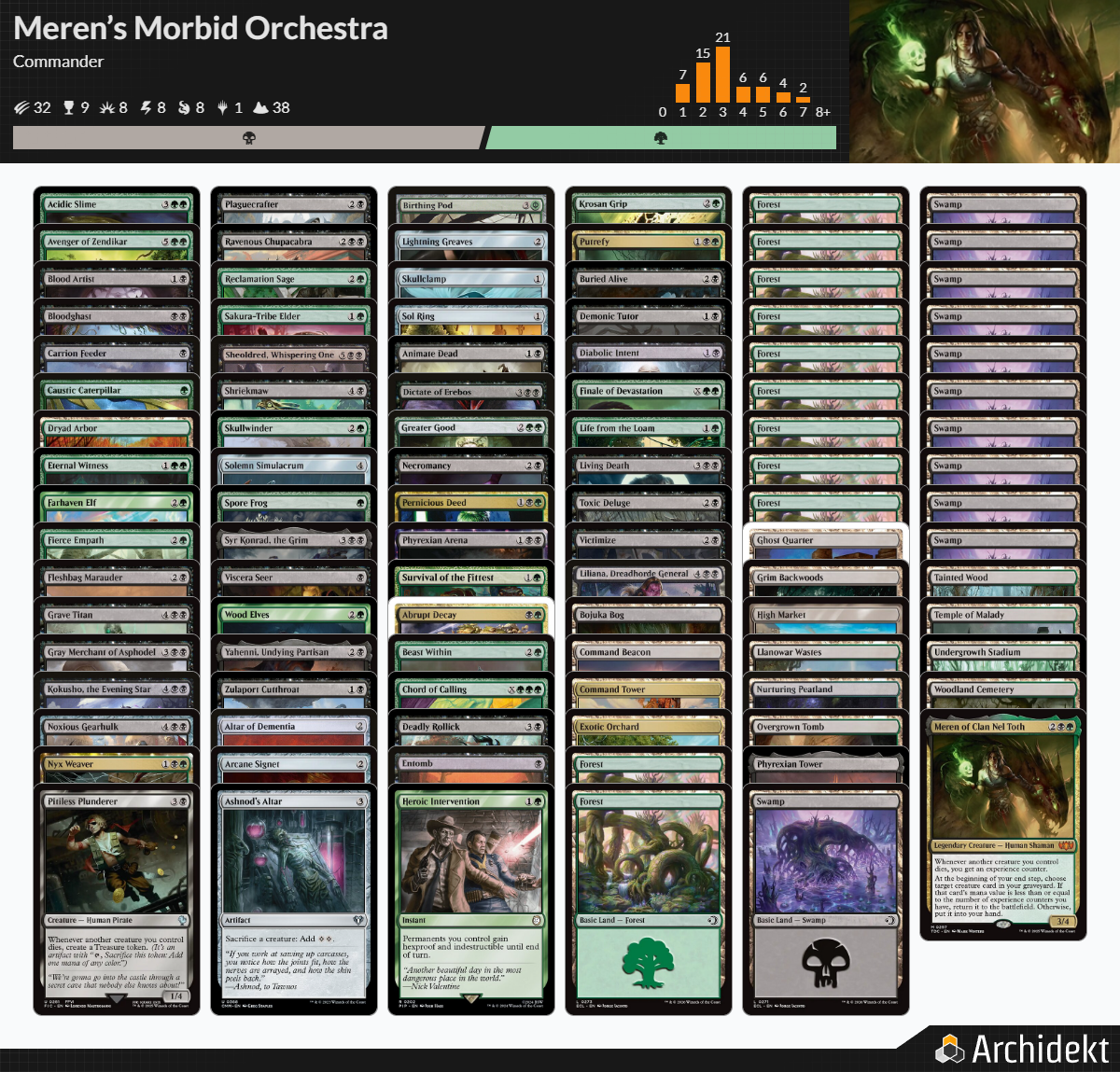
Meren’s Morbid Orchestra – Conducting a Symphony of Life and Death
Commander: Meren of Clan Nel Toth – a legendary Golgari shaman who earns experience counters whenever your creatures die. At the beginning of your end step, she turns those counters into raw value: if the creature you target has a mana value less than or equal to your experience counters, it returns to the battlefield; otherwise, it goes back to your hand. In other words, she “looks at your graveyard on your end step and finds your favorite reanimation target”, making every death feed the next movement of your concerto.
This deck is tagged as cEDH, graveyard, sacrifice, aristocrats, experience counters, tokens, and midrange. It lives up to that billing by orchestrating a complex dance of sacrifice and recursion. Creatures are instruments in your morbid symphony; sac outlets and tutors are the percussion and sheet music that keep the rhythm; drain effects and experience counters build toward a crescendo that ends games.
Key Themes and Components
Sacrifice & Drain: The lifeblood of the deck. Carrion Feeder, Viscera Seer, Yahenni, Undying Partisan and Ashnod’s Altar let you sacrifice creatures at will, building experience counters and triggering death synergies. Your payoff creatures, Blood Artist, Zulaport Cutthroat, Syr Konrad, the Grim, Kokusho, the Evening Star, and Gray Merchant of Asphodel, drain opponents whenever creatures die or enter the battlefield, converting your loop into lethal life swings.
Recursion: Meren’s ability anchors a suite of reanimation. Reanimate, Animate Dead, Necromancy, Victimize, Living Death, Skullwinder, Eternal Witness and Sheoldred, Whispering One return creatures or any card from the graveyard. Bloodghast and Life from the Loam ensure land drops double as creature recursion, while Skullclamp and Greater Good let you convert creatures into cards.
Ramp & Tutors: Efficient ramp from Sol Ring, Arcane Signet, Pitiless Plunderer, Sakura‑Tribe Elder, Farhaven Elf and Wood Elves accelerates you into bigger plays. A powerful tutor package, Demonic Tutor, Diabolic Intent, Entomb, Survival of the Fittest, Birthing Pod, Chord of Calling, Finale of Devastation, Buried Alive and Fierce Empath, finds whatever piece of your orchestra is missing.
Removal & Interaction: Sixteen removal options, from Abrupt Decay, Beast Within, Pernicious Deed and Toxic Deluge to creature‑based answers like Acidic Slime, Fleshbag Marauder, Plaguecrafter, Ravenous Chupacabra, Shriekmaw, Noxious Gearhulk and Reclamation Sage, ensure you can disrupt opponents’ plans while assembling your own. Heroic Intervention, Lightning Greaves and Spore Frog protect your board or fog combat, locking opponents out of meaningful attacks.
Token & Landfall Engine: Grave Titan and Avenger of Zendikar produce an army of Zombie and Plant tokens. Coupled with Pitiless Plunderer and Ashnod’s Altar, each token can be sacrificed for mana and experience counters. Greater Good and Skullclamp convert those bodies into cards, while Blood Artist‑style effects turn them into damage.
Experience Counter Synergy: Cheap creatures like Sakura‑Tribe Elder and Spore Frog repeatedly die to build your experience pool. Once you have three or more counters, Meren turns heavier hitters like Kokusho, Gray Merchant, Avenger or Noxious Gearhulk directly onto the battlefield every end step, overwhelming the table with advantage.
Sample Game Plan
Opening Act: Use your ramp creatures and mana rocks to fix mana and play Meren early. Sacrifice Sakura‑Tribe Elder, Wood Elves, or Farhaven Elf to ramp and immediately gain experience counters. Deploy sac outlets like Viscera Seer or Carrion Feeder. Cast value creatures such as Eternal Witness or Skullwinder to recur key spells.
Middle Movements: Start tutoring for your core pieces. Buried Alive can set up a loop by dumping Kokusho, Gray Merchant and Victimize into your graveyard. Survival of the Fittest, Birthing Pod and Chord of Calling transform excess creatures into combo components. Establish your drain engines (Blood Artist, Zulaport Cutthroat, Syr Konrad). Use Meren’s reanimation to recur protection like Spore Frog every turn or to repeatedly exploit Fleshbag Marauder–type effects, shredding opposing boards while growing your experience pool.
Final Crescendo: With a large graveyard and experience counters, loop your reanimation and sacrifice engines for lethal. Classic patterns include:
Kokusho the Evening Star + Sac Outlet + Meren: repeatedly sacrifice Kokusho to drain each opponent for 5 life, reanimate it with Meren at end step, and continue until the table is dead.
Pitiless Plunderer + Ashnod’s Altar + Token Producer (e.g., Avenger of Zendikar): sacrifice tokens for mana and Treasure, reanimate them with Meren or other recursion to generate infinite mana and an arbitrary number of death triggers, then finish with Gray Merchant or Syr Konrad.
Spore Frog + Meren: fog each combat step, locking the table out of attacking while you assemble a win.
Living Death / Necromancy / Victimize: mass‑reanimate your best creatures while wiping opponents’ boards.
Encore: Use Finale of Devastation or Chord of Calling for large X values to search up Avenger of Zendikar or Grave Titan, giving your tokens +X/+X and haste to swing for lethal. Alternatively, cast Gray Merchant of Asphodel or Kokusho multiple times via Meren, draining life totals to zero.
Narrative & Feel
Meren’s Morbid Orchestra plays like a dark symphony. Meren is the conductor, standing atop a graveyard podium, coaxing creatures back into tune. Sacrifice outlets are the drums and strings, beating a steady rhythm of death. Drain effects are the brass section, blaring as life is siphoned from your opponents. Tutors and recursion spells are sheet music and encore requests, ensuring every section plays in harmony. As experience counters build and the graveyard fills, the music swells; then, in a final crescendo, your orchestra overwhelms the table with endless bodies and inexorable drains.
This deck rewards mastery of timing and sequencing. It asks you to weave value out of death, to know which creature is the right instrument for the moment, and to conduct the morbid orchestra to a flawless finish. Whether you’re piloting it in competitive games or midrange pods, Meren’s Morbid Orchestra offers a rich, synergistic play experience that combines powerful combos with flavorful gameplay.
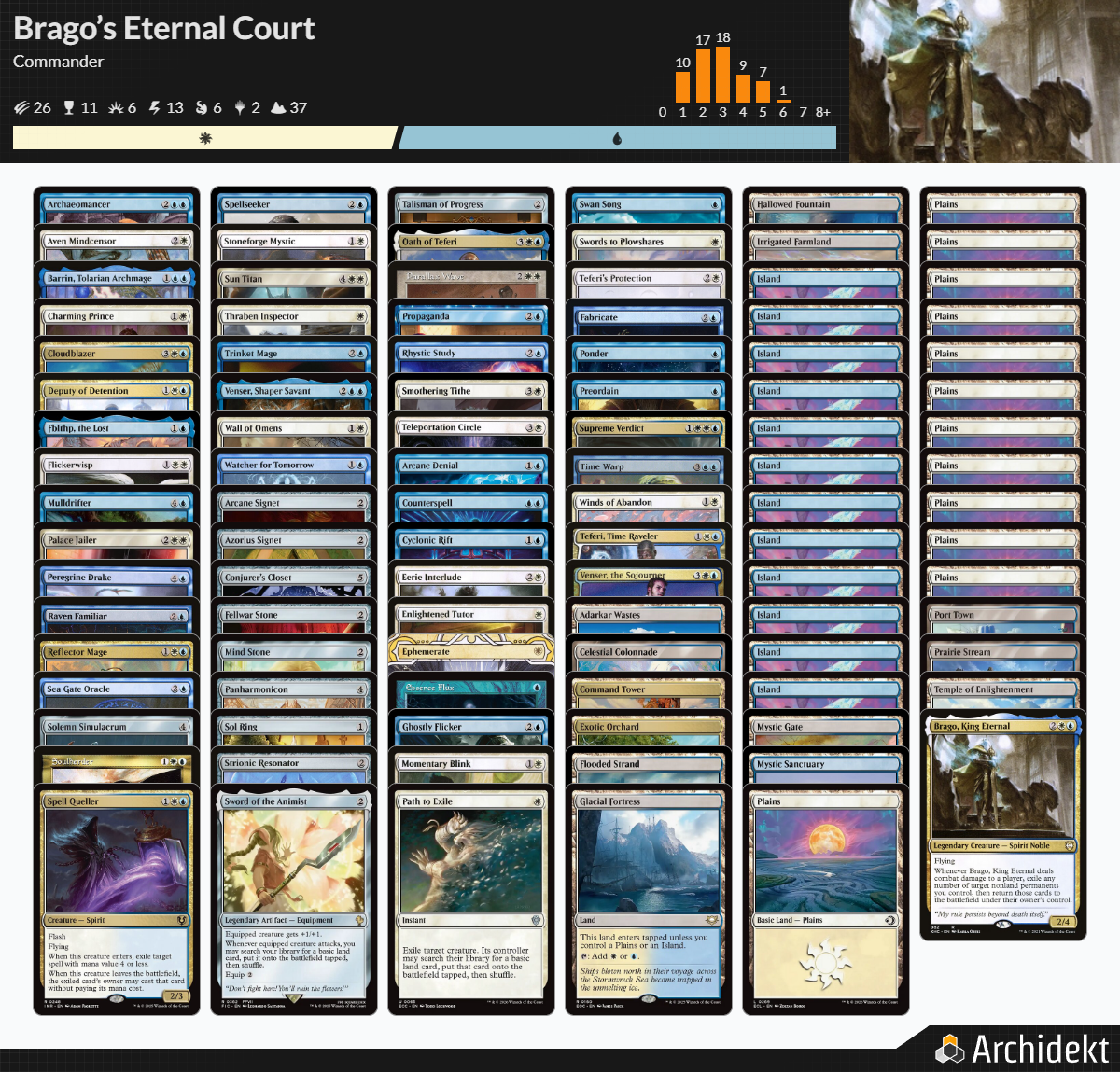
Brago’s Eternal Court
Brago, King Eternal rules over a court where time folds in on itself. His sole ability – when he deals combat damage to a player he exiles any number of target non‑land permanents you control then returns them to the battlefield – is deceptively simple yet incredibly potent. Because creatures and artifacts lose all memory of their previous state when they change zones, they return as fresh objects ready to trigger enters‑the‑battlefield abilities or untap your mana rocks. With Brago as your spectral monarch, the entire deck is built to capitalize on this “blink” mechanic.
Theme and Tags
Blink / ETB Value – Repeat your creatures’ ETB effects for card draw, removal, and ramp. Cards like Wall of Omens, Spirited Companion and Archaeomancer cycle through your deck while Reflector Mage and Skyclave Apparition act as reusable removal. Stonehorn Dignitary and Lavinia of the Tenth lock down opposing attackers and permanents.
Control & Stax – The deck eschews heavy permission spells in favor of repeatable board control. Supreme Verdict, Farewell and Cyclonic Rift wipe away threats while Brago resets your own board. Stax pieces such as Elesh Norn, Mother of Machines amplify your ETBs and choke opponents’ creatures, while Panharmonicon doubles your triggers.
Flicker Engines – Enchantments and artifacts like Teleportation Circle, Conjurer’s Closet and Thassa, Deep‑Dwelling provide redundant blink triggers. Strionic Resonator and Lithoform Engine can copy Brago’s trigger for explosive turns.
Ramp & Rocks – Efficient artifacts (Sol Ring, Arcane Signet, Mind Stone, Talisman of Progress) ensure Brago appears early and power your combos later. Creatures like Solemn Simulacrum, Peregrine Drake and Archaeomancer feed the mana engine while doubling as blink targets.
Protection & Evasion – Swiftfoot Boots, Whispersilk Cloak and Flickerwisp keep Brago safe and unblockable so his ability triggers every combat. Ghostly Flicker, Ephemerate and Momentary Blink protect key permanents from removal and let you reuse ETBs at instant speed.
Win Conditions – While your primary plan is to grind opponents into submission, you have several ways to close the game. Infinite mana combos revolve around Peregrine Drake: soulbond it with Deadeye Navigator and each flicker untaps five lands, netting positive mana. Alternatively, use Strionic Resonator or Lithoform Engine to copy Brago’s trigger; each resolution untaps your mana rocks and allows further copies. Another loop uses Archaeomancer plus Ghostly Flicker to repeatedly untap Peregrine Drake and return Ghostly Flicker to hand. Once you have infinite mana, use Folio of Fancies to mill everyone out, or cast and then quickly rebound Approach of the Second Sun.
Game Plan
Early Game
Develop your mana base with rocks and cheap ETB creatures. Play resource‑advantage bodies like Wall of Omens, Spirited Companion or Watcher for Tomorrow to draw cards and dig for key pieces. Deploy stax creatures (Stonehorn Dignitary, Lavinia of the Tenth) to hinder aggro decks, and set up protective equipment or enchantments so Brago can safely connect.
Mid Game
Cast Brago, King Eternal and attack, Whispersilk Cloak or Rogue’s Passage ensure he connects. Start the blink engine: every combat resets your permanents, drawing cards, ramping lands, and locking down opponents. Deploy blink engines like Teleporation Circle, Conjurer’s Closet and Thassa, Deep‑Dwelling so that even in Brago’s absence you can keep flickering. Use your ETB creatures repeatedly to remove threats (Reflector Mage, Skyclave Apparition, Meteor Golem), steal permanents (Agent of Treachery), or neutralize attackers (Stonehorn Dignitary).
Late Game
Transition into combo mode once you have enough mana and pieces assembled. Soulbond Peregrine Drake with Deadeye Navigator or loop it with Ghostly Flicker and Archaeomancer to generate infinite mana. Copy Brago’s trigger with Strionic Resonator or Lithoform Engine to chain blink triggers and float mana. With unlimited resources, lock opponents out by repeatedly flickering Stonehorn Dignitary or Lavinia of the Tenth, mill everyone with Folio of Fancies or cast Approach of the Second Sun twice in one turn. If combat is open, amass a fleet of angels or clones via Preston, the Vanisher and overwhelm the board.
Conclusion
Brago’s Eternal Court is a tempo‑control and combo deck masquerading as a value engine. Each turn is a carefully choreographed performance: play a symphony of ETB creatures, flicker them with regal ease, and watch as your opponents’ threats vanish while your own resources grow. Whether you’re grinding incremental value or executing an infinite mana crescendo, Brago ensures that your court remains eternal. Pilot this deck with patience and foresight, and you’ll conduct an orchestra of ghosts that bends time to your will.
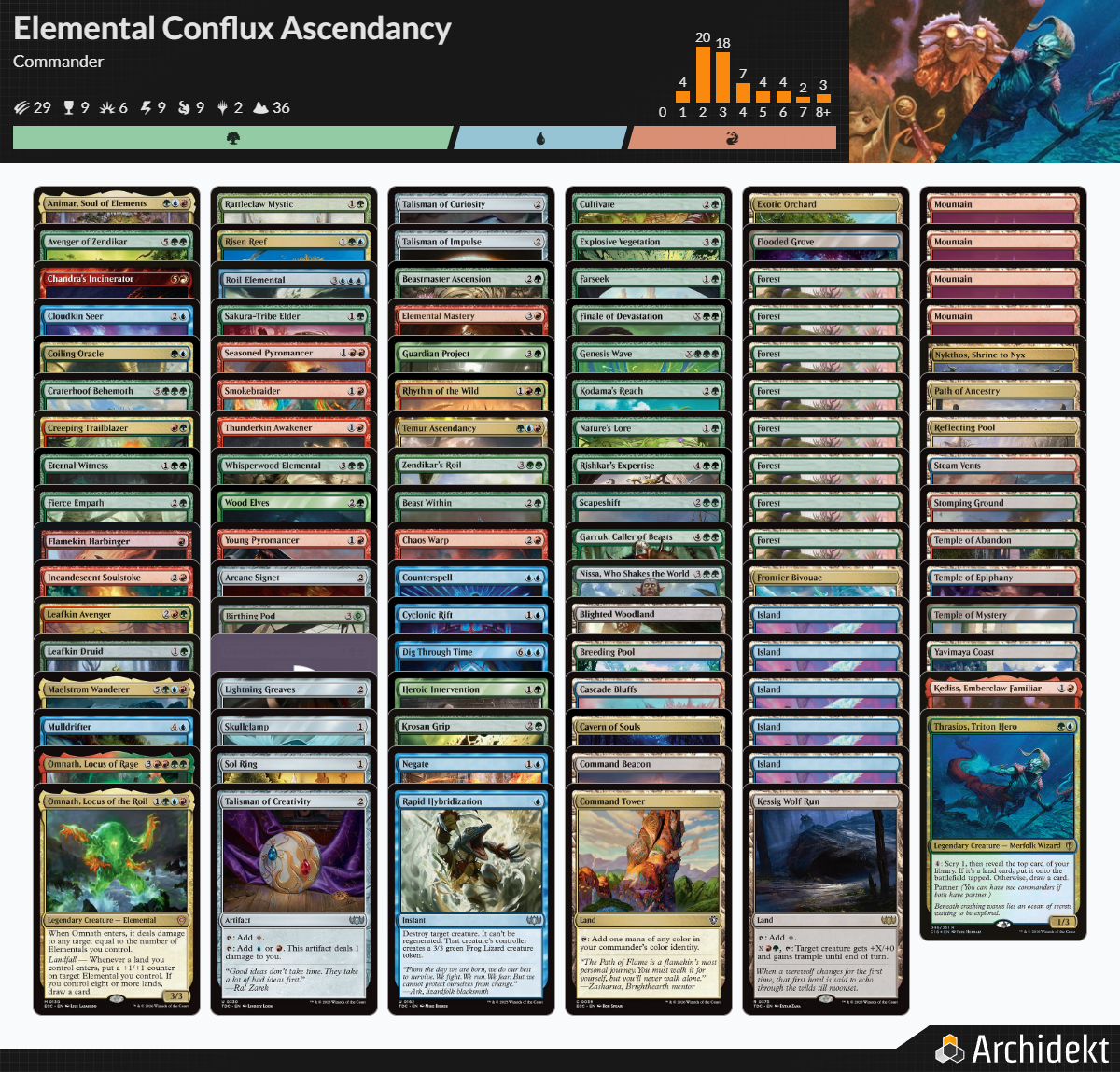
Elemental Conflux Ascendancy
In this Temur symphony, Kediss, Emberclaw Familiar and Thrasios, Triton Hero lead an elemental uprising. Kediss ensures that whenever one of your commanders deals combat damage to a player, that much damage is also dealt to each other opponent, spreading the flames across the table. Thrasios offers resource management; his activated ability lets you scry 1 and then reveal the top card of your library, if it’s a land it enters tapped, otherwise you draw it. Together these partners supply card advantage, mana acceleration and universal burn, forming the spine of a deck that harnesses the fury of Elemental tribal and landfall synergies.
Themes and Engines
Elemental Tribal & ETB Value: The deck is packed with Elementals and cards that care about them. Risen Reef smooths draws and ramps: whenever it or another Elemental enters, you look at the top card of your library, putting a land onto the battlefield tapped or drawing the card instead. Creatures like Creeping Trailblazer, Incandescent Soulstoke and Leafkin Avenger pump or generate extra mana for your Elemental army, while Whisperwood Elemental protects your board and manifests creatures from your deck.
Landfall & Token Production: Landfall payoffs such as Avenger of Zendikar, Roil Elemental, Zendikar's Roil and Omnath, Locus of Rage transform every land drop into power. Omnath’s ability creates a 5/5 red and green Elemental whenever a land enters play, and when it or another Elemental dies it deals 3 damage to any target. Combined with Scapeshift, Cultivate, Explosive Vegetation and Kodama’s Reach, you can flood the board with tokens and burn opponents out.
Ramp & Cascade: A robust ramp package, Sol Ring, talismans, Arcane Signet, Chromatic Lantern, Coiling Oracle, Nature’s Lore, Explosive Vegetation, Nissa, Who Shakes the World and Risen Reef, ensures you can cast high‑cost threats quickly. Animar, Soul of Elements reduces the cost of your creatures, while Maelstrom Wanderer cascades twice into value spells and grants haste so your Elemental horde can attack immediately.
Tutors & Recursion: Birthing Pod, Fierce Empath, Flamekin Harbinger and Finale of Devastation let you find the right Elemental or finisher at the right time. Eternal Witness and Thunderkin Awakener recycle key cards or bring back Elementals from your graveyard.
Protection & Interaction: To keep your engine intact, you run Heroic Intervention, Lightning Greaves, Rhythm of the Wild (granting riot and making your creatures uncounterable) and Whisperwood Elemental. Removal spells like Beast Within, Chaos Warp, Counterspell, Cyclonic Rift, Krosan Grip and Rapid Hybridization ensure you can answer problematic permanents, while Negate and Counterspell protect your combo turn.
Finishers & Anthems: Beastmaster Ascension and Beastmaster Ascension (two times? might not; there is Beastmaster Ascension; we can mention). Actually there is Beastmaster Ascension, Creeping Trailblazer and Incandescent Soulstoke as anthem effects. The primary finisher is Craterhoof Behemoth; with a wide board of Elementals and plant tokens, it pumps the team and grants trample for a lethal alpha strike. Temur Ascendancy draws cards off your big creatures and gives them haste, while Riskar’s Expertise, Genesis Wave and Guardian Project replenish your hand.
Strategy and Lines of Play
Opening
Focus on ramping and establishing your tribal engine. Play early mana rocks (Sol Ring, Talismans, Arcane Signet) and ramp spells (Nature’s Lore, Cultivate, Coiling Oracle). Deploy Risen Reef early, with every Elemental that follows it will accrue cards or lands. Use Flamekin Harbinger or Fierce Empath to find crucial pieces like Craterhoof Behemoth or Avenger of Zendikar. If possible, land Animar, Soul of Elements to start discounting your creatures.
Midgame
Cast your commanders. Thrasios ensures you never run out of lands or cards, while Kediss threatens to turn any commander damage into a table‑wide burn. Stabilize the board with removal and mass interaction like Cyclonic Rift. Then begin assembling your landfall engine: play and flicker Avenger of Zendikar, Zendikar’s Roil or Omnath while fetching lands with Explosive Vegetation, Kodama’s Reach or Scapeshift. Use Birthing Pod to upgrade small Elementals into larger threats, or Thunderkin Awakener to bring back key creatures.
Late Game and Win Conditions
Once your board is established, you have several avenues to victory:
Craterhoof Behemoth Lethal: Generate a massive army of Elemental and Plant tokens via Avenger of Zendikar and Omnath, then tutor up Craterhoof Behemoth to give everything a huge power boost and trample. With Creeping Trailblazer or Beastmaster Ascension also on the field, the attack will often be lethal. Kediss turns a single commander strike into a burn spell that hits everyone.
Landfall Burn Loop: Combine Omnath, Locus of Rage with Scapeshift to create multiple 5/5 tokens and then sacrifice lands or Elementals via Birthing Pod or removal spells. Each Elemental death deals 3 damage to any target, allowing you to ping down players or planeswalkers while maintaining a threatening board.
Genesis Wave / Finale of Devastation: With abundant mana from ramp and Nissa, cast an enormous Genesis Wave or Finale of Devastation to flood the battlefield with permanents. A large Finale (X≥10) can grant your creatures +X/+X and haste, effectively duplicating Craterhoof’s effect for a surprise victory.
Cascade Value: Maelstrom Wanderer cascades into multiple spells, giving you free Elementals and ramp spells. Combine this with Temur Ascendancy to draw cards and give them haste.
Conclusion
Elemental Conflux Ascendancy is an explosive Temur brew that blends tribal synergy, landfall, and ramp into a cohesive musical score. Kediss conducts the damage across all opponents, while Thrasios keeps the tempo steady with scrying and card flow. Each turn adds new instruments to the orchestra: tokens sprout from landfall, Elementals empower one another, and cascade spells crescendo into overwhelming force. With careful sequencing and an ear for harmony, you’ll build toward a climactic finish where Craterhoof’s roar or Omnath’s eruptions end the concert in a blaze of glory.